
Why Does My Lower Back Hurt After Playing Pickleball?
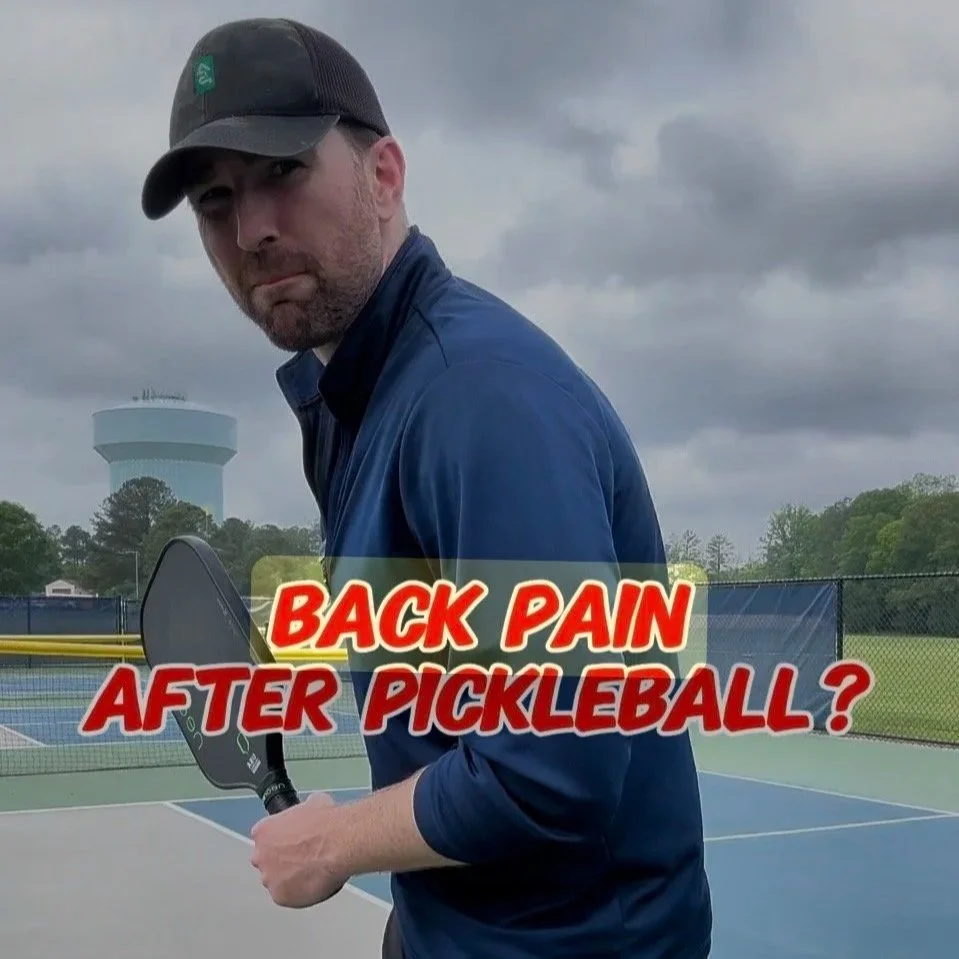
If your lower back feels tight, stiff, or achy after a few hours on the pickleball court, you’re not alone.
Pickleball may not look as demanding as running or traditional court sports, but your body is constantly squatting, reaching, rotating, lunging, stopping, starting, and trying to stay balanced.
And if your body isn’t prepared for those positions, your lower back may end up taking on more stress than you’d like.
One of the biggest things I see with pickleball players is that they simply aren’t strong enough through their core, hips, glutes, and hamstrings to maintain good positioning for hours at a time.
Why Your Lower Back May Hurt After Pickleball
Think about how much time you spend at the kitchen line.
You’re often slightly crouched while trying to keep your torso upright and your paddle ready.
For many players, instead of creating that position primarily through the hips, knees, and core, they compensate by extending through the lower back.
That means the pelvis may tip forward and the lower back stays in a more extended position for long periods of time.
Lumbar extension itself isn’t necessarily bad. Your spine is designed to move.
The problem can come when you spend hours repeatedly loading the same position without enough strength, mobility, movement variety, or recovery.
Eventually, the muscles surrounding your lower back may start working overtime.
Your Back May Be Doing Work Your Hips and Core Should Be Helping With
Your lower back shouldn’t have to do everything.
Ideally, your body can distribute the demands of pickleball through several areas:
Core
Glutes
Hamstrings
Hips
Legs
Upper back
If your hips don’t move particularly well, your hamstrings and glutes aren’t contributing enough, or your core struggles to control your pelvis and rib cage, your lower back may compensate.
This becomes even more important when you play for several hours.
A position that feels completely fine during the first 20 minutes may feel very different after two or three hours of dinking, lunging, reaching, and rotating.
That’s why part of our goal with pickleball prehab is building enough strength and movement capacity that you can repeatedly get back toward a comfortable, controlled position.
Playing More Isn’t Always the Same as Preparing Your Body More
One of the biggest mistakes I see is this:
Someone loves pickleball, so they keep playing more pickleball.
They might play three, four, or five days per week.
But they don’t warm up.
They don’t cool down.
They aren’t doing mobility work.
They aren’t strength training.
Then they wonder why something starts hurting.
Your body still needs preparation.
If you’re asking your muscles and joints to perform for hours every week, you should also spend some time away from the court building the physical qualities necessary to tolerate all of that pickleball.
That doesn’t mean you need hour-long workouts.
Even a small amount of consistent mobility, strength work, and prehab can go a long way.
What Should Pickleball Players Work On?
For many of the players I work with, we focus on two things:
1. Restoring movement
We want to reduce excessive tension around the hips, lower back, and surrounding muscles and give the body opportunities to move into positions it may not spend much time in during pickleball.
2. Building strength and control
We then strengthen the core, hamstrings, glutes, and hips so the lower back doesn’t have to handle the entire workload.
Here are a few simple exercises we commonly use.
Child’s Pose
Child’s pose can be a great way to gently relax the lower back while moving the spine into more flexion.
Instead of forcing the stretch, breathe slowly and let your ribs, back, and hips gradually relax.
Try taking 3–5 slow breaths.
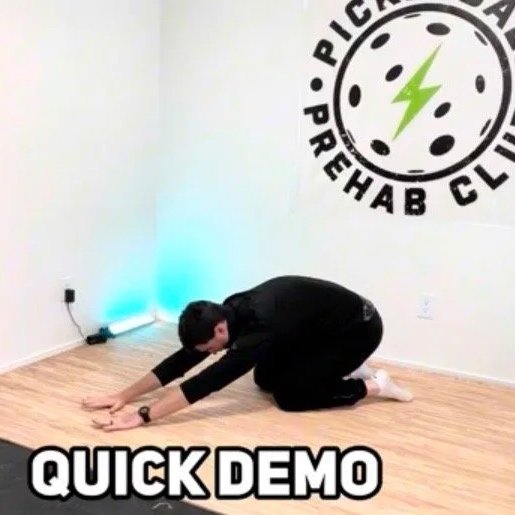
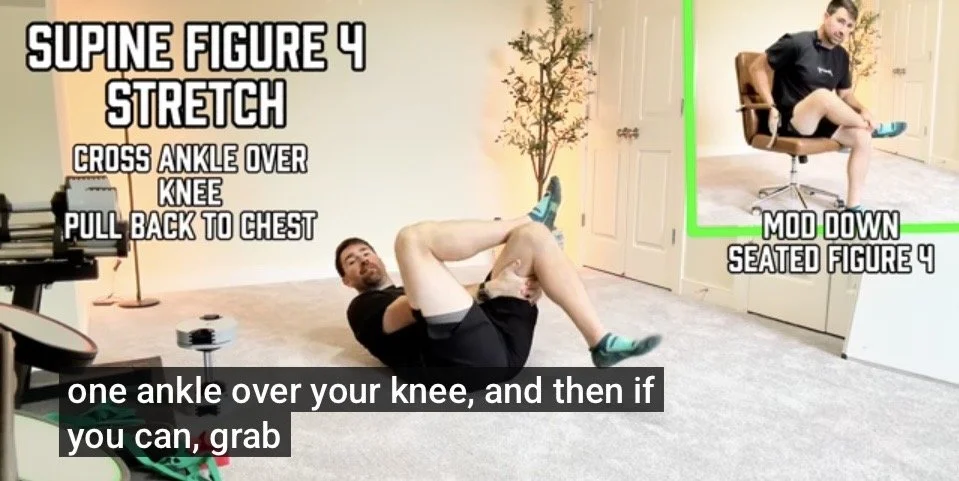
Figure-4 Stretch
This stretch targets the hips and glutes, which can become stiff after spending hours moving around the court.
Hold a comfortable position and take several slow breaths rather than aggressively pulling yourself deeper into the stretch.
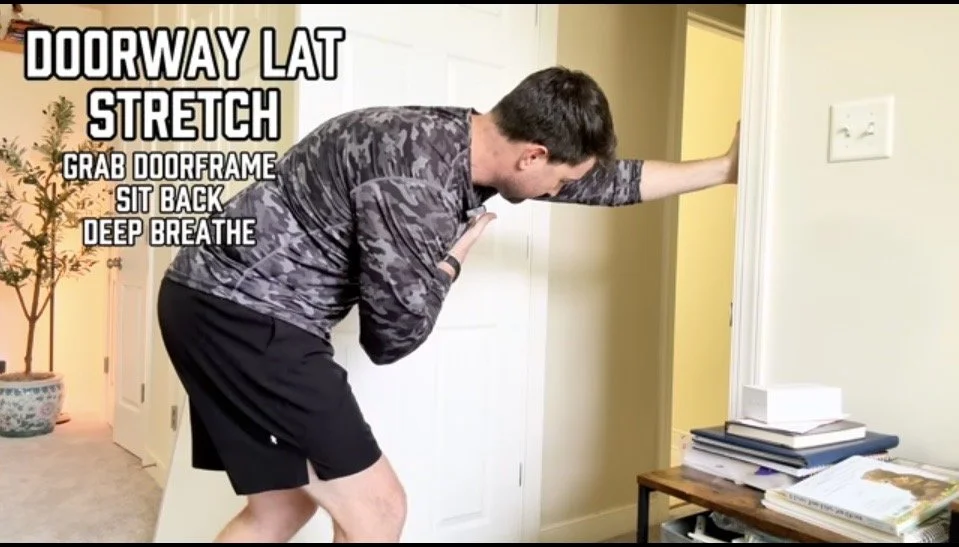
Lat Stretch
Your lats connect your upper body to your pelvis and can influence how your trunk moves.
Giving them some attention can help restore movement through your shoulders, rib cage, and upper back instead of asking your lower back to create all of your movement.
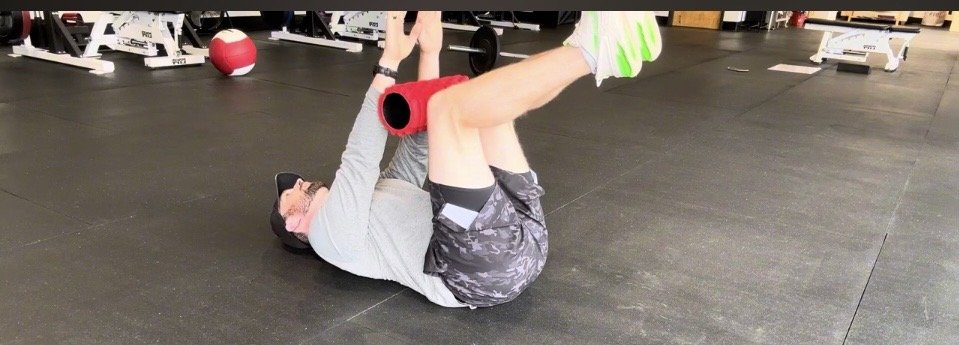
Dead Bug Hold
This is one of my favorite exercises for teaching someone how to control the position of their ribs and pelvis.
Rather than doing dozens of repetitions, try holding a controlled dead bug position while taking 3–5 slow breaths.
The goal isn’t simply to “tighten your abs.”
You’re learning how to maintain control while breathing.
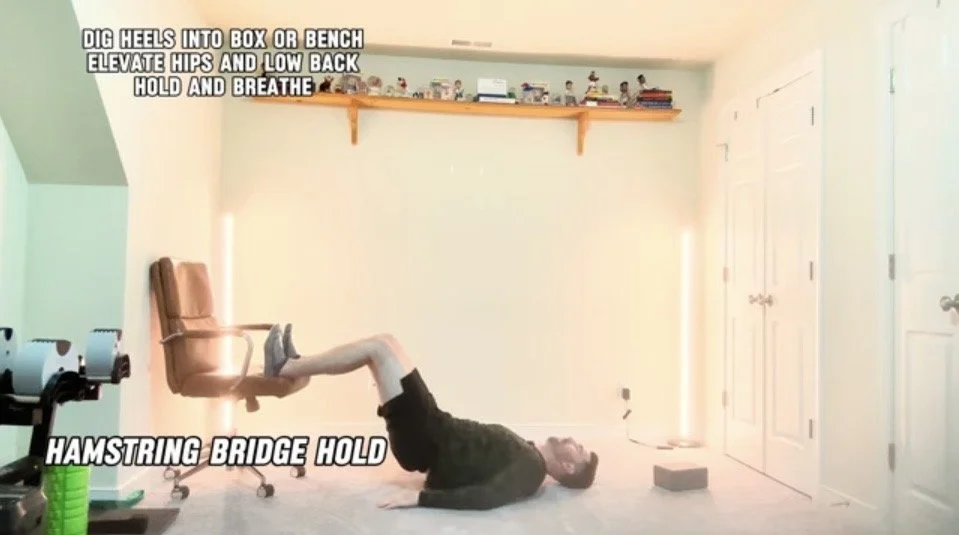
Hamstring Bridge
The hamstrings can play an important role in controlling the pelvis and helping you get out of an excessively extended position.
Set up your bridge so you feel the backs of your legs working rather than simply squeezing your lower back.
Hold the position and take several slow breaths.
Don’t Forget Your Warm-Up
If your first athletic movement of the day is walking onto the pickleball court and immediately playing a competitive game, you’re missing an easy opportunity to prepare your body.
A good pickleball warm-up should help you:
Move your hips
Rotate your upper back
Activate your core
Wake up your glutes
Prepare your ankles and legs
Gradually increase your movement speed
Then, after playing, a short cooldown can help you move out of the repetitive positions you spent hours using on the court.
You don’t need 30 minutes.
Five or ten intentional minutes can be enough to start building a better routine.
Want an Easy Place to Start?
I created a 6-Day Pickleball Body Reset to give pickleball players simple warm-ups and cooldowns they can use before and after playing.
Instead of wondering what stretches or exercises you should be doing, you can follow the routine and start building better habits around your pickleball.
These are the same types of mobility, strength, and prehab principles we use inside Prehab 365 to help pickleball players build stronger, more resilient bodies so they can keep doing what they love.
One Important Note
Lower-back pain can have many different causes, and every body is different.
The exercises and ideas above are general education and aren’t meant to diagnose or treat a specific injury.
If you’re experiencing severe pain, numbness or tingling, progressive weakness, symptoms traveling down the leg, changes in bowel or bladder function, pain following a significant fall or injury, or pain that continues to worsen, it’s a good idea to be evaluated by a qualified healthcare professional.
The goal isn’t simply to keep playing through pain.
It’s to build a body that’s better prepared for the amount of pickleball you want to play.
Less aches. More confidence. More pickleball.
-Coach Garrett
